Littleton's Odor Elimination Specialists
Stop smoke odor from coming back
If the source is missed, smoke smell can return months after the home looks clean.
Littleton's Odor Elimination Specialists
If the source is missed, smoke smell can return months after the home looks clean.
Smoke odor is not solved by candles, paint, or a quick air scrub. Odor compounds bind to porous materials, unfinished wood, insulation, fabric, duct dust, and contents. In dry Colorado air, smoke can leave a concentrated smell that gets stronger when the home warms up.
Littleton homes with finished basements and attached garages can have several odor reservoirs at once. A small garage fire may push smoke into living spaces. A kitchen fire may leave protein odor inside cabinets, range hoods, and nearby HVAC returns.
Professional odor elimination starts with source removal. Charred debris, contaminated insulation, wet soot, and unsalvageable porous materials may need to leave before deodorizing equipment can work.
Contractors may use ozone treatment, hydroxyl generators, thermal fogging, HEPA air filtration, duct cleaning, and encapsulating sealers. The method depends on occupancy, materials, carrier approval, and the scope of contamination.
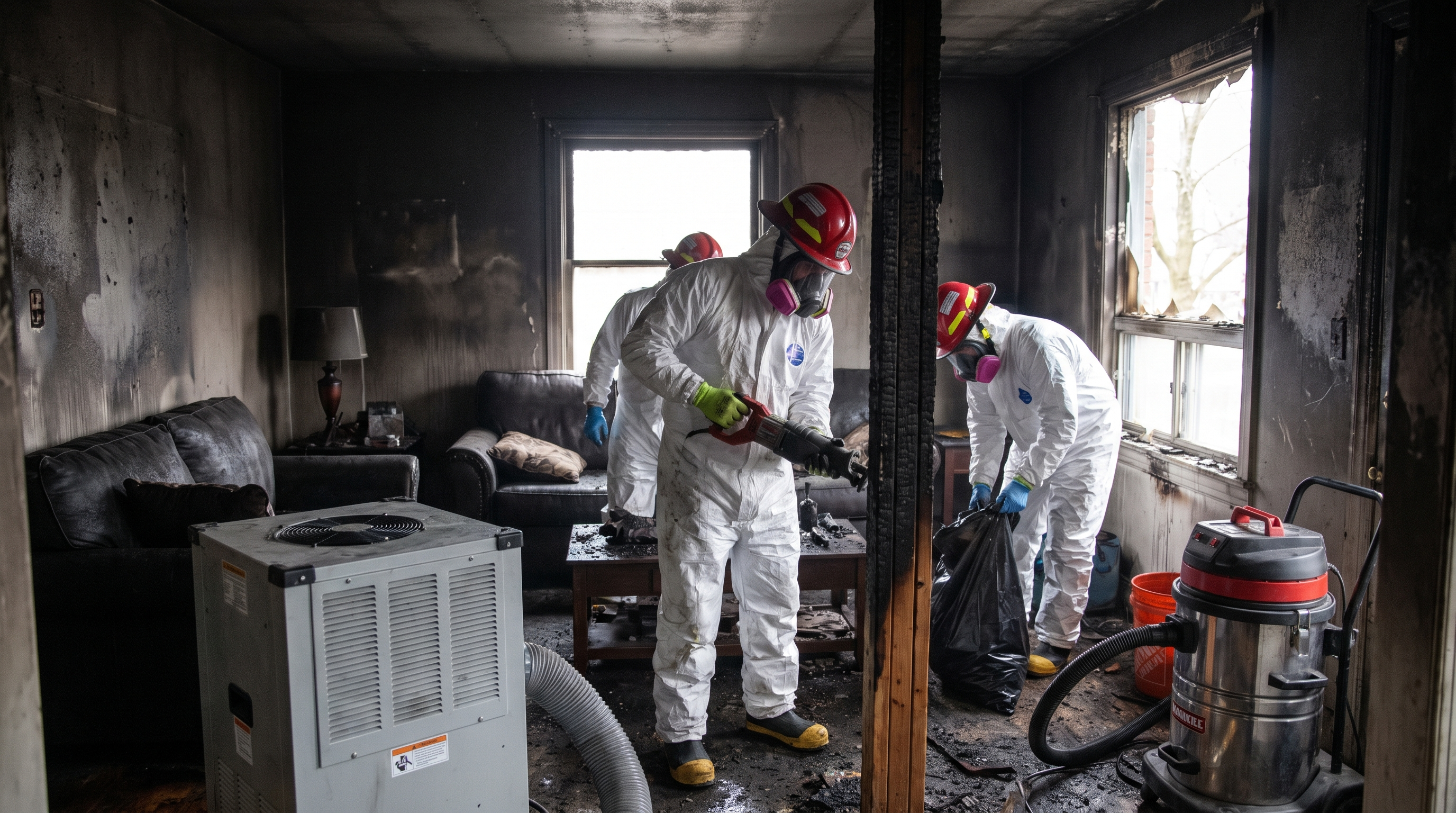
The odor plan targets the source first, then treats air, surfaces, contents, and hidden pathways in the right order.
Burned debris, contaminated porous material, and wet soot are removed or isolated before deodorization begins. Odor treatment without source control rarely lasts.
Contractors may use ozone, hydroxyl, thermal fogging, HEPA filtration, and targeted cleaning based on the materials and occupancy needs.
When smoke has entered framing, sheathing, or other porous structural materials, sealing may be needed after cleaning. This helps prevent odor release after temperature and humidity changes.
Contractors inspect where smoke traveled and what absorbed it. That prevents short-term masking from replacing real removal.
Ozone, hydroxyl, fogging, and sealing each have limits. The right approach depends on who can occupy the home and what materials remain.

Ask for odor source identification before repainting or replacing finishes.
Free — no obligations
The contractor identifies burned materials, smoke pathways, contaminated contents, and porous surfaces holding odor.
Debris, soot, wet materials, and salvageable surfaces are cleaned or removed before equipment treatment.
Ozone, hydroxyl, fogging, filtration, or other approved methods are used based on the home and materials.
Remaining odor points are checked, and encapsulation is considered where smoke has entered structural materials.