Littleton's Smoke & Soot Cleanup Specialists
Soot cleanup before residue sets in
Acidic soot can stain and etch surfaces within days, so cleanup should start as soon as the structure is safe.
Littleton's Smoke & Soot Cleanup Specialists
Acidic soot can stain and etch surfaces within days, so cleanup should start as soon as the structure is safe.
Soot does not stay in the burned room. It rides pressure changes, HVAC airflow, stairwells, attic bypasses, and small gaps around framing. In Littleton's dry climate, residue can settle heavily on cabinets, electronics, clothing, painted walls, insulation, and unfinished storage areas.
Different fires leave different residue. A protein fire from a kitchen flare-up can leave a yellow-brown film and a sharp odor. Synthetic materials can create oily soot that smears when cleaned with the wrong product. Wood and paper smoke can leave dry ash that travels widely.
Cleanup crews choose methods based on the residue, surface, and room use. They may use HEPA vacuuming, chemical sponges, wet cleaning, duct cleaning, controlled demolition, and sealing where odor has entered porous materials.
Good smoke cleanup also protects the claim. If a carrier's first estimate only includes the obvious room, contractors can document why adjoining rooms, HVAC components, attic insulation, or contents need attention.
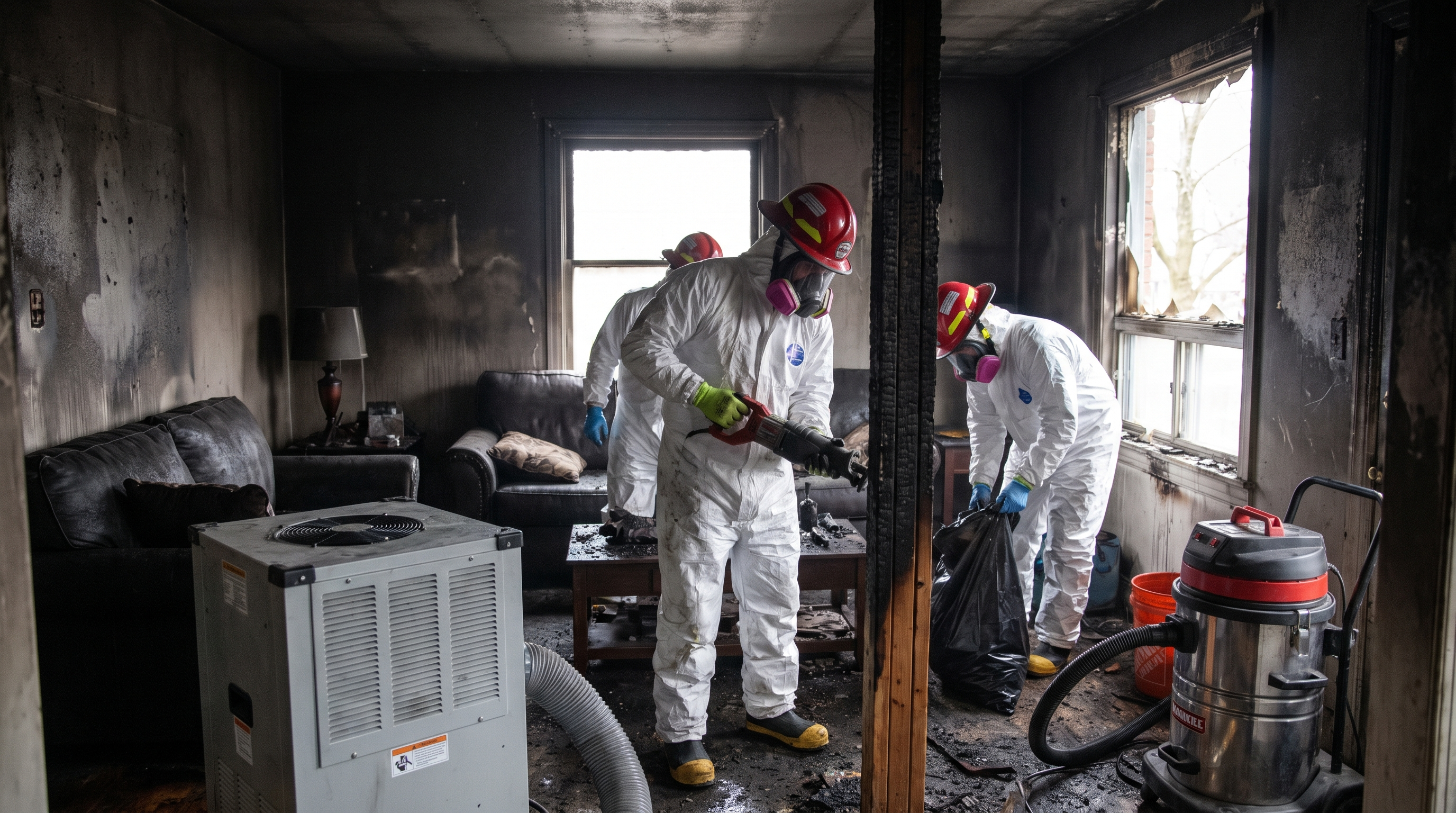
Smoke cleanup combines source removal, surface cleaning, air pathway control, and odor preparation. The exact scope depends on what burned and how far the smoke traveled.
Technicians identify dry soot, oily soot, protein residue, and mixed deposits before selecting cleaning methods. That prevents smearing, staining, and avoidable surface damage.
Walls, ceilings, cabinets, trim, fixtures, furniture, and salvageable contents are cleaned with methods matched to the material. Items that cannot be cleaned safely are documented for the contents claim.
Smoke often enters returns, ducts, attic areas, and wall cavities. Contractors inspect these routes so odor does not return after visible surfaces look clean.
Kitchen smoke, electrical fires, and synthetic materials require different cleaning chemistry. Matching the method to the residue protects cabinets, paint, fixtures, and electronics.
Split-level homes and finished basements can pull smoke into hard-to-see air pathways. Contractors inspect those areas before declaring a cleanup complete.

Ask for a smoke cleanup estimate before residue becomes permanent staining.
Free — no obligations
Affected areas are isolated where possible to reduce cross-contamination into clean rooms.
HEPA vacuuming and dry cleaning methods remove loose soot before wet products are used.
Technicians clean surfaces and contents with products matched to residue type and surface sensitivity.
The contractor reviews cleaned areas and identifies any remaining odor sources that need deodorization or sealing.